
Best recipe for Tonkotsu ramen
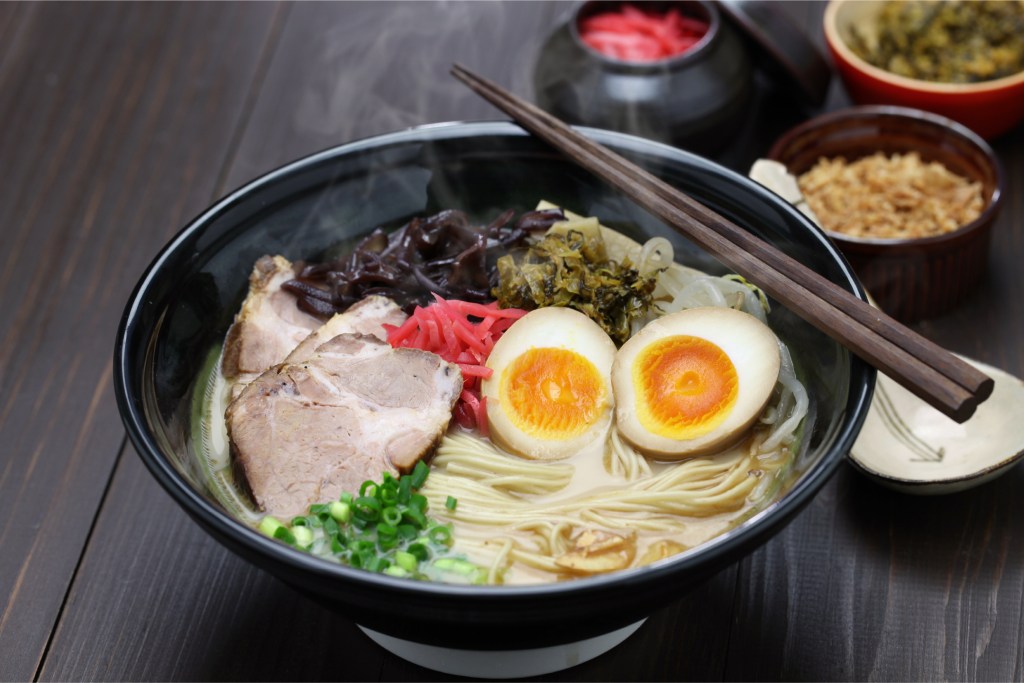
Ingredients
- For the nitamago eggs
- 4 eggs
- 2 Tbsp. soy sauce
- 2 Tbsp. mirin
- 4 Tbsp. Kombu and Katsuobushi Dashi
- For the pork stock
- 2¾ lb. pork shoulder bones
- 1 large onion, peeled and cut in half
- 1 carrot, unpeeled, diced
- 20 g (¾ oz.) fresh ginger, unpeeled, thinly sliced
- 2 garlic cloves, peeled and left whole
- For the char siu
- 3 lb. 5 oz. pork belly, skin removed
- 10 g (¼ oz.) fresh ginger, unpeeled, sliced
- 4 inches leek, green part only (or 2 spring onions/scallions)
- Generous ¾ cup soy sauce
- ⅓ cup plus 1 Tbsp. sake
- 3 ½ Tbsp. mirin
- 2 Tbsp. soft light brown sugar
- 2 Tbsp. rice vinegar
- For the soup
- 1.2 quarts pork stock
- 1 tsp. fine sea salt
- ¼ cup Char Siu cooking liquid
- 2 tsp. light soy sauce
- 4 portions dried ramen noodles, cooked following the packet instructions until al dente, then drained
- Optional toppings
- 4 Nitamago Eggs, halved
- 2 spring onions/scallions, thinly sliced
- 1 Tbsp. toasted white sesame seeds
- 2 tsp. grated garlic
- 2 dried wood ear mushrooms, soaked in water for 10 minutes, well drained and sliced
- 20 g (¾ oz.) pickled ginger
- 1 sheet nori seaweed, cut into squares
Instruction
- Step 1
For the Nitamago Eggs, bring 1.5 litres/quarts water to the boil in a medium-sized saucepan. Carefully lower the eggs into the boiling water with a slotted spoon to prevent them from breaking. Boil for exactly 7 minutes over a medium-high heat for the perfect soft egg yolks.
- Step 2
Meanwhile, combine the soy sauce, mirin and dashi in a large resealable plastic bag to make a marinade for the eggs.
- Step 3
When the eggs have finished boiling, immediately transfer to a bowl and run under cold water to quickly cool them down.
- Step 4
When cooled, peel the eggs. Place the peeled eggs into the plastic bag with the marinade, making sure the eggs are immersed in the liquid. Dip the bag into a bowl of cold water to remove any air and seal immediately so it is almost vacuum packed. Refrigerate and let marinate for at least 20 minutes, or up to 2 days, turning the eggs a few times to ensure even marinating.
- Step 5
For the char siu, roll the meat into a cylindrical shape and secure tightly with kitchen string. Transfer to a medium saucepan and cover with cold water. Add the ginger and leek, then bring to the boil. Reduce the heat, cover with a lid and simmer for 40 minutes.
- Step 6
Remove the pork from the pan and set aside. Keep 2 cups of cooking water in the pan (discarding excess), then add the soy sauce, sake, mirin, brown sugar and rice vinegar. Return the pork to the pan, cover and cook over a low heat for 2 hours.
- Step 7
Place the pork and sauce in a suitable container, ensuring it is covered with the sauce. Let cool, then refrigerate and marinate overnight. The pork will keep this way for up to 1 week until you are ready to serve.
- Step 8
For the pork stock, boil the bones in a large saucepan with 3 quarts of water for 10 minutes. Replace the cooking water with 3 quarts of fresh water. Add the onion, carrot, ginger and garlic to the bones, then bring back to the boil. Simmer gently, covered with a lid, for 8 hours for best results (6 hours minimum). Add roughly 2 quarts fresh water every 2 hours, when you see any of the bones uncovered, the stock should turn milky-white. Strain the stock using a fine-mesh sieve/strainer and return to the pan over a low heat.
- Step 9
Remove the char siu from the fridge. Remove the kitchen string (save the cooking liquid) and thinly slice the meat, ready to top the soup.
- Step 10
To the pork stock in the pan, mix in the sea salt, ¼ cup char siu cooking, and light soy sauce. Bring the soup almost to the boil again to heat through.
- Step 11
To serve, divide the hot soup between serving bowls and add the cooked noodles. Top with slices of char siu pork and a selection of other toppings, such as eggs, spring onions/scallions, sesame seeds, grated garlic, mushrooms, pickled ginger, and nori seaweed.
(By Atsuko Ikeda – January 19, 2023. Cook book – Tonkotsu Ramen. Retrieved from Epicurious)
Asian Food Supply
Bring more Japanese Culture and merchandise into the European market.
Centre Athéna, 2 Rue Henri Bergson, 67200 Strasbourg, France
info@thanhsonimex.com
+45 93839868
 Asian Food Supply